

A labyrinth is not a maze
One has a single path and no choices. The other has junctions and dead ends. Calling them the same thing mis-sells the page.
Draft copy. This piece was written during the site build and is waiting on an editorial pass — the facts are checked, the prose is not final.
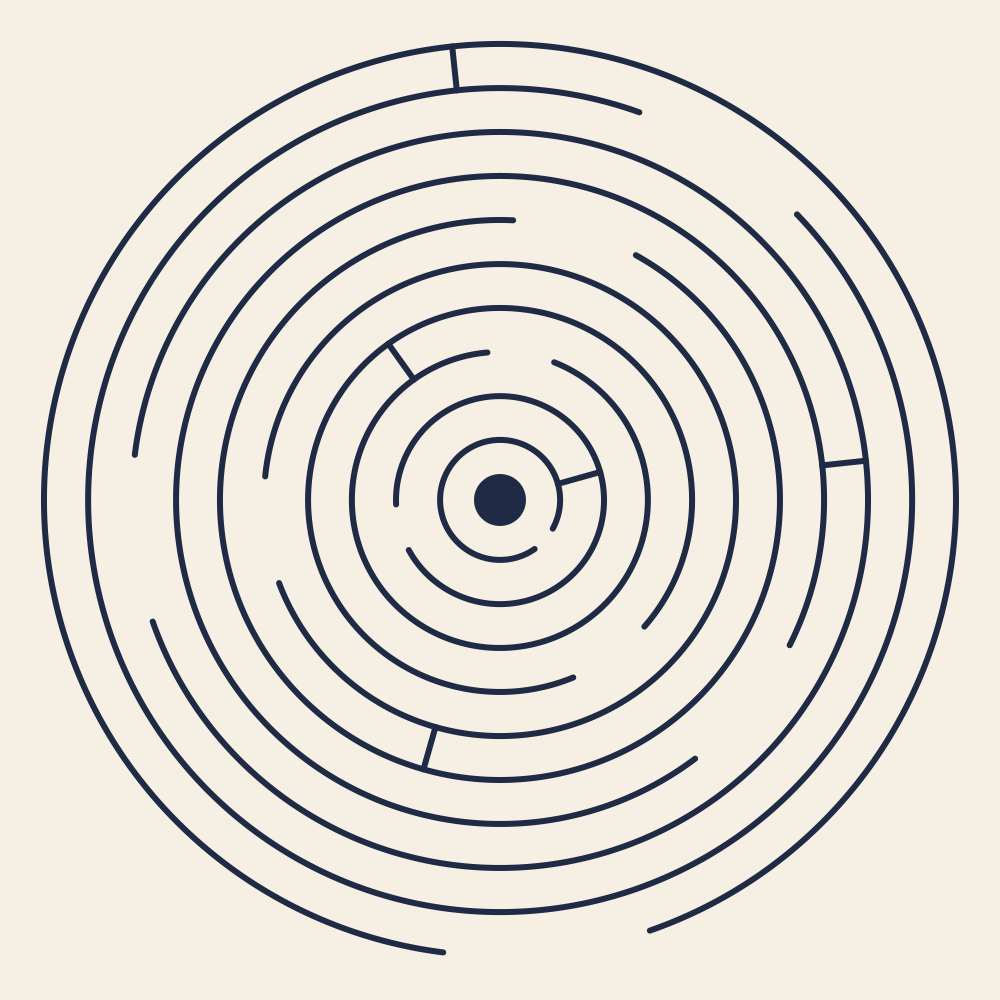
A labyrinth has one path. It folds back on itself many times, it is long, and you cannot get lost in it — there are no junctions to get lost at. Walking one is a meditative act, not a puzzle. The eleven-circuit labyrinth set into the floor of Chartres cathedral around 1200 is the famous example, and people still walk it.
A maze has junctions, branches and dead ends. It is solved.
Why it matters in a puzzle book
A book that prints a labyrinth and calls it a maze has sold you a puzzle with no puzzle in it. You will trace it, arrive at the centre, and feel vaguely cheated without knowing why.
So we label every page, and we put the labyrinths and the mazes in separate sections.
One solution, verified
Every maze we publish is checked by a solver before it goes to print: exactly one path from entrance to centre, no unreachable regions, no accidental second solution. Hand-drawn mazes get this wrong more often than you would think.
Mentioned above
Everything this post points at
Keep reading
Related posts
"Bold and easy" is a design brief, not a lower standard
Thick lines and open fields are harder to draw well than intricate ones. Here is the test we use.
Five tiles and a thousand years of Persian walls
Girih patterns look impossibly complicated and are built from five shapes. Here is the set, and what the tilemakers were actually drawing.
What a kolam actually is, and why the dots come first
A kolam is one unbroken line looped around a grid of dots. That constraint is the whole art form — here is how it works and how to draw your first one.