

Design family
Girih
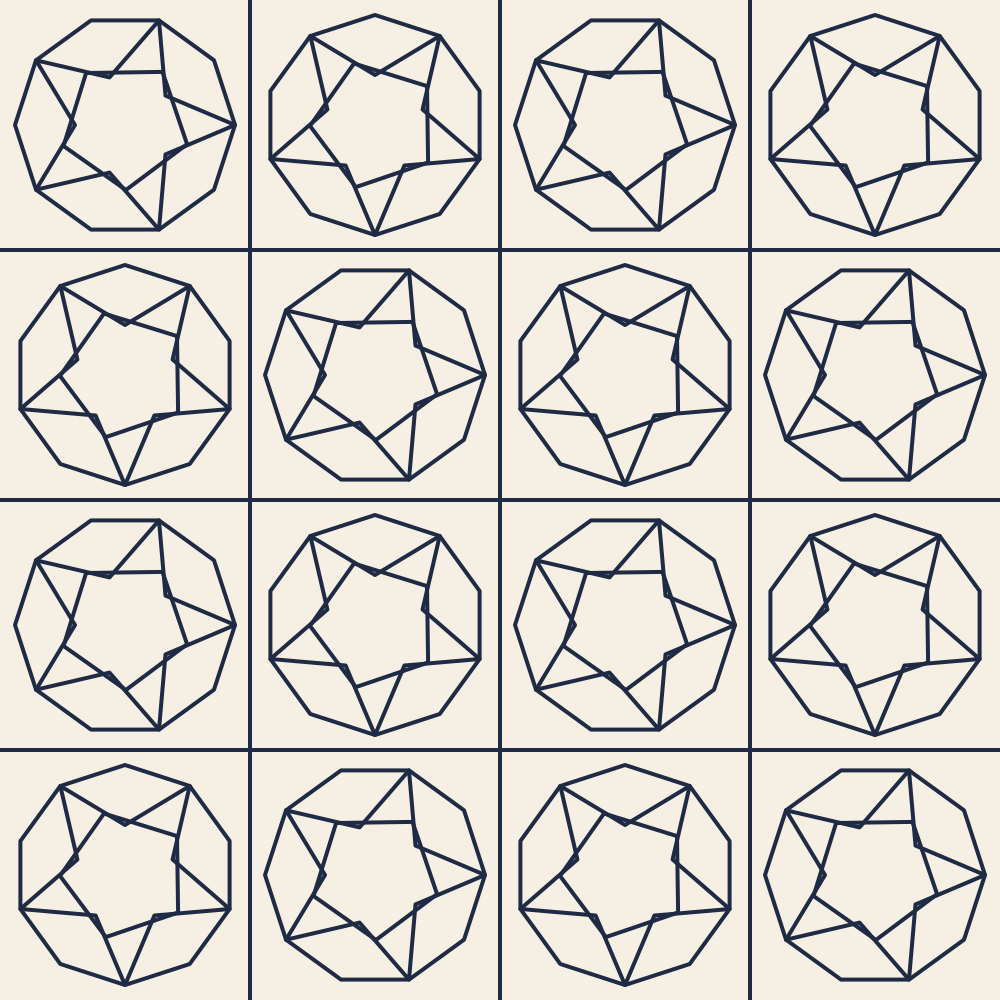
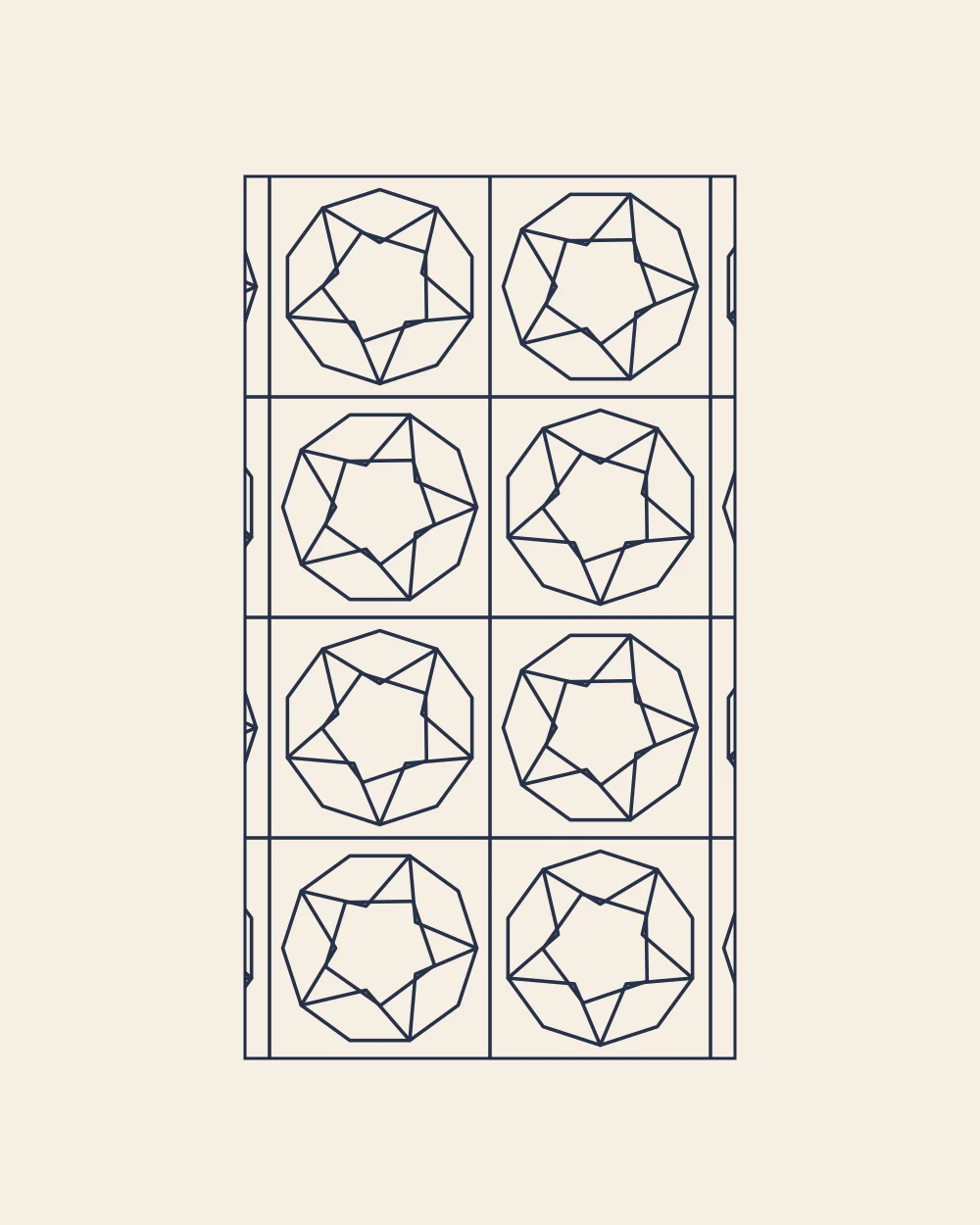
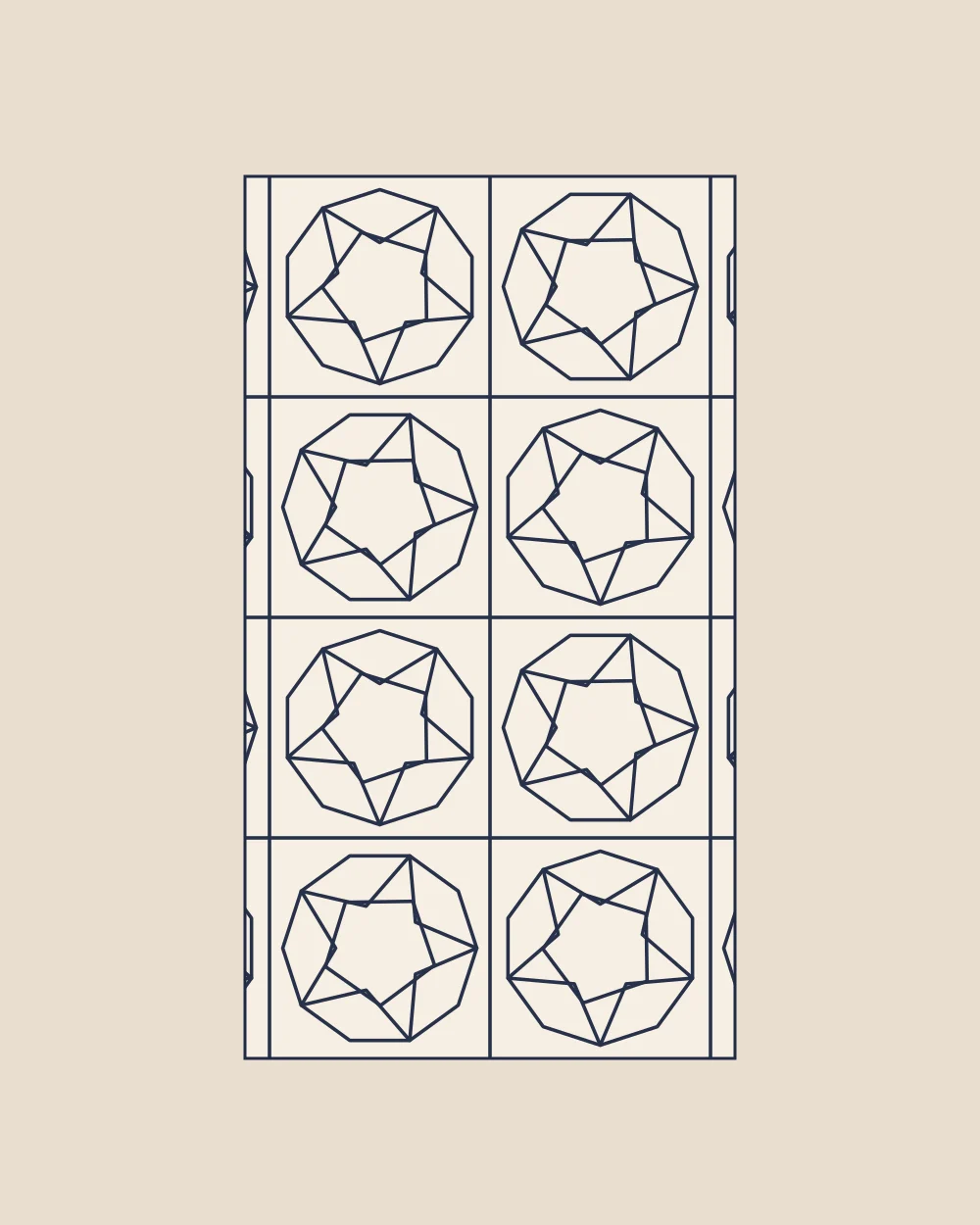
Five tiles and one unbroken strapwork that runs across every edge.
- Motifsdecagon · bowtie · rhombus · elongated hexagon · regular pentagon
- Line weightintricate
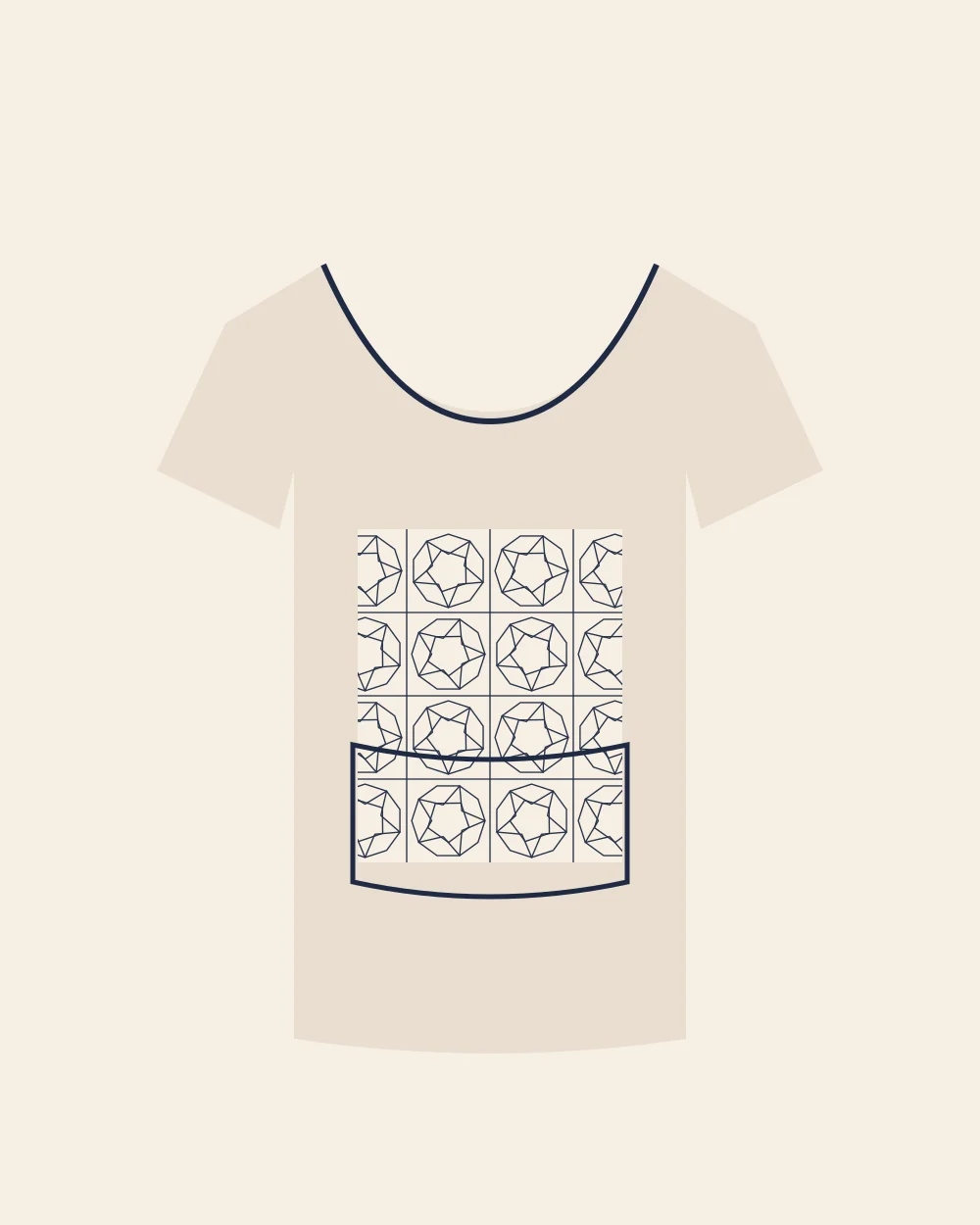
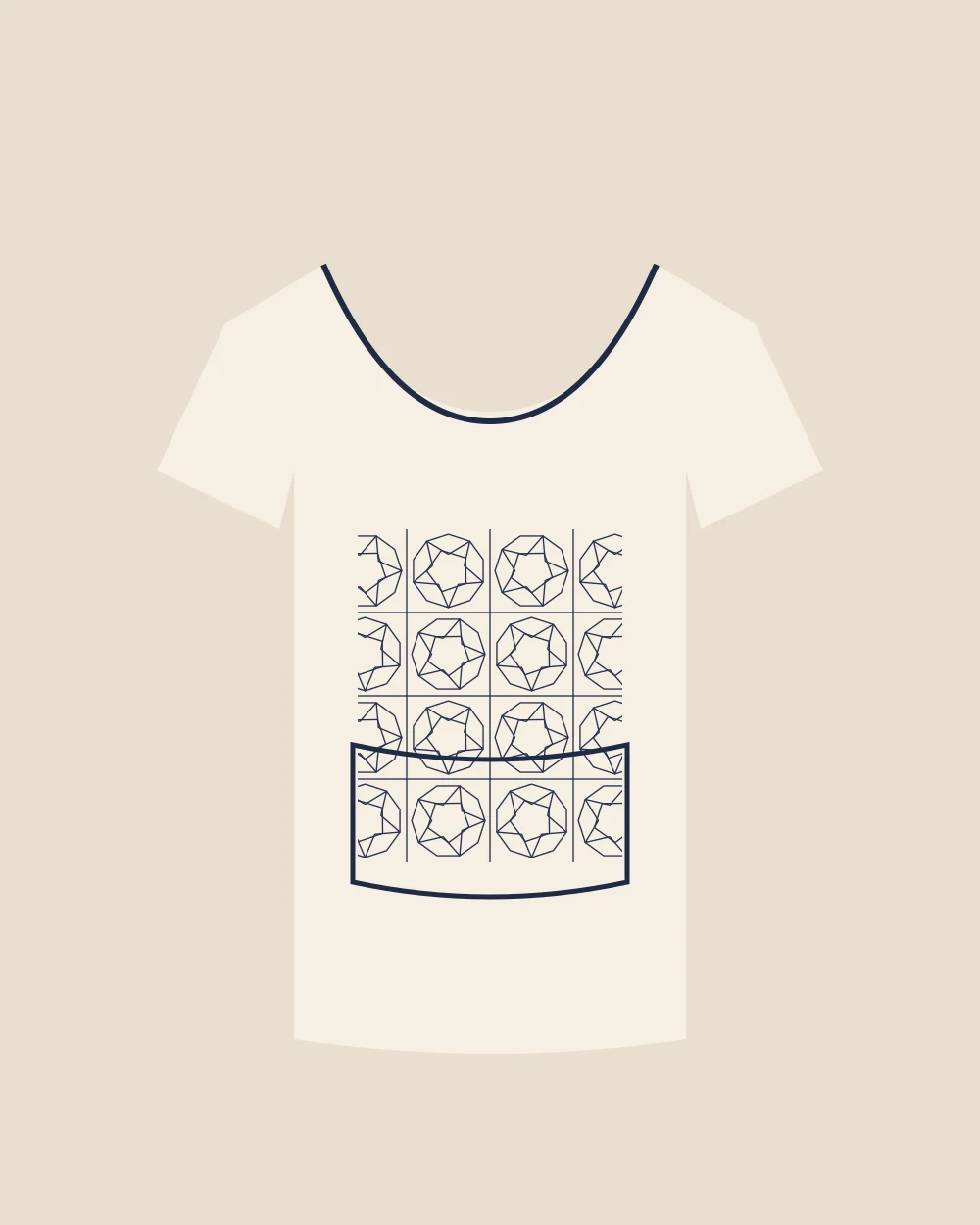
- Available onprints · apparel · home · tech · digital
The story
The history behind Girih
Rooted in: Persia, Anatolia and Central Asia
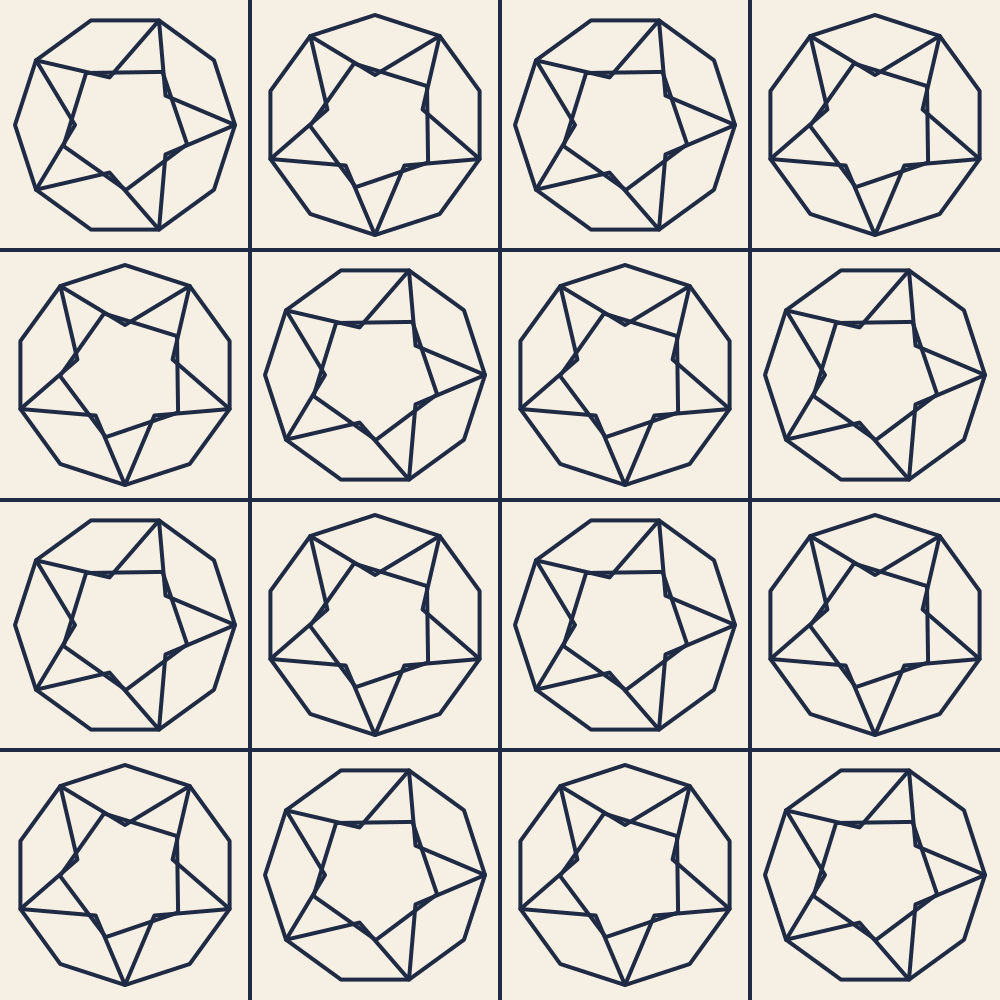
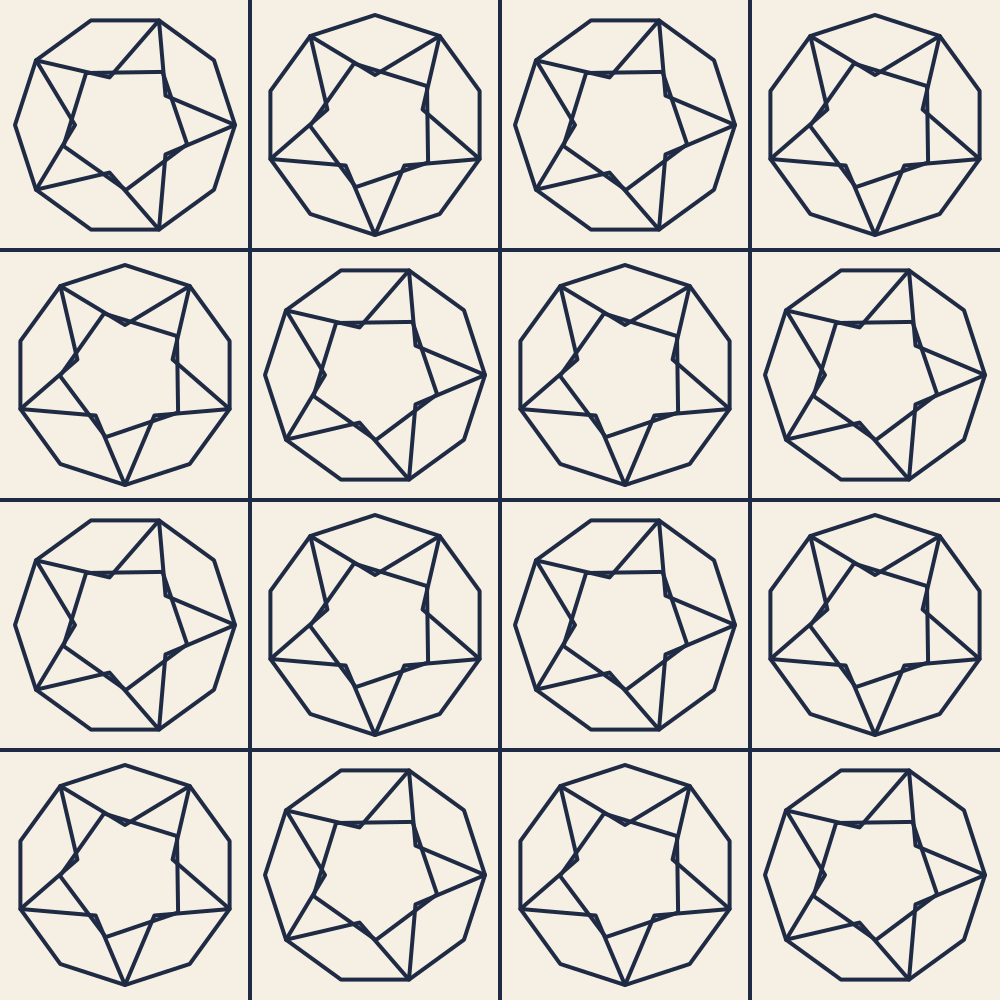
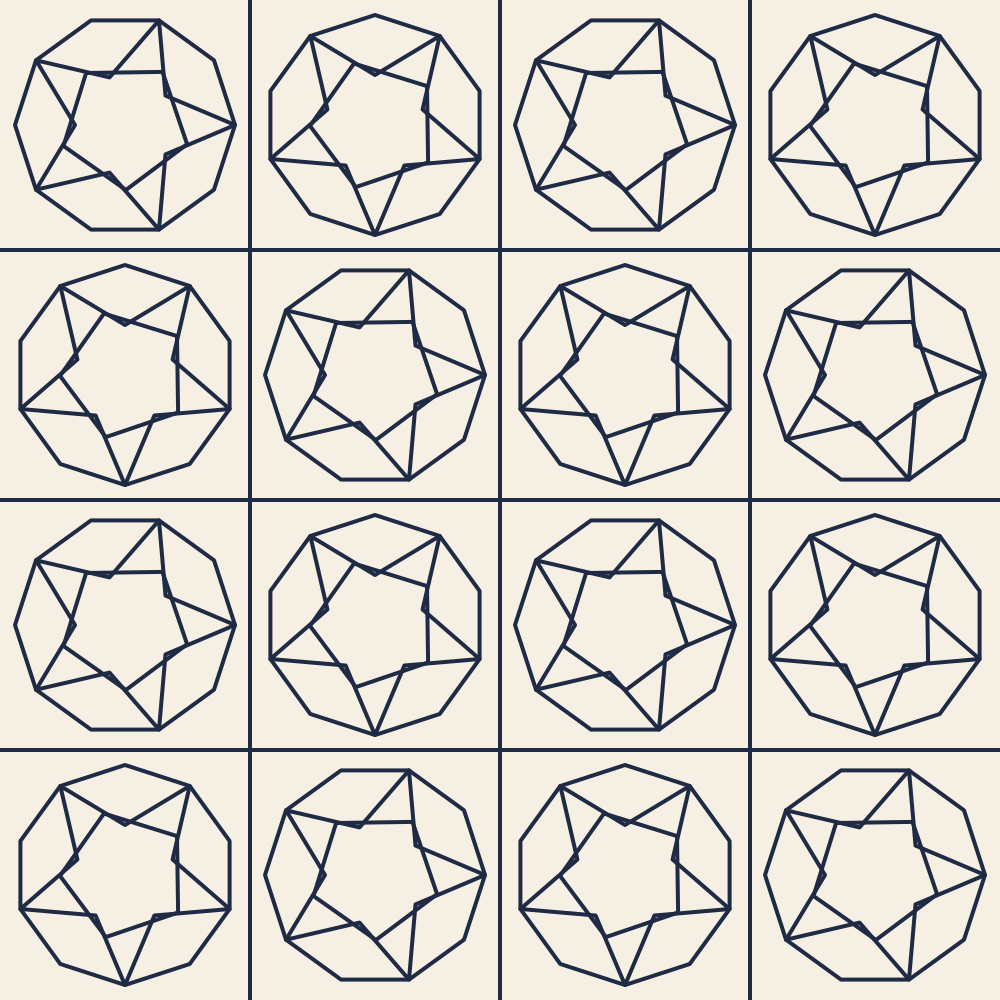
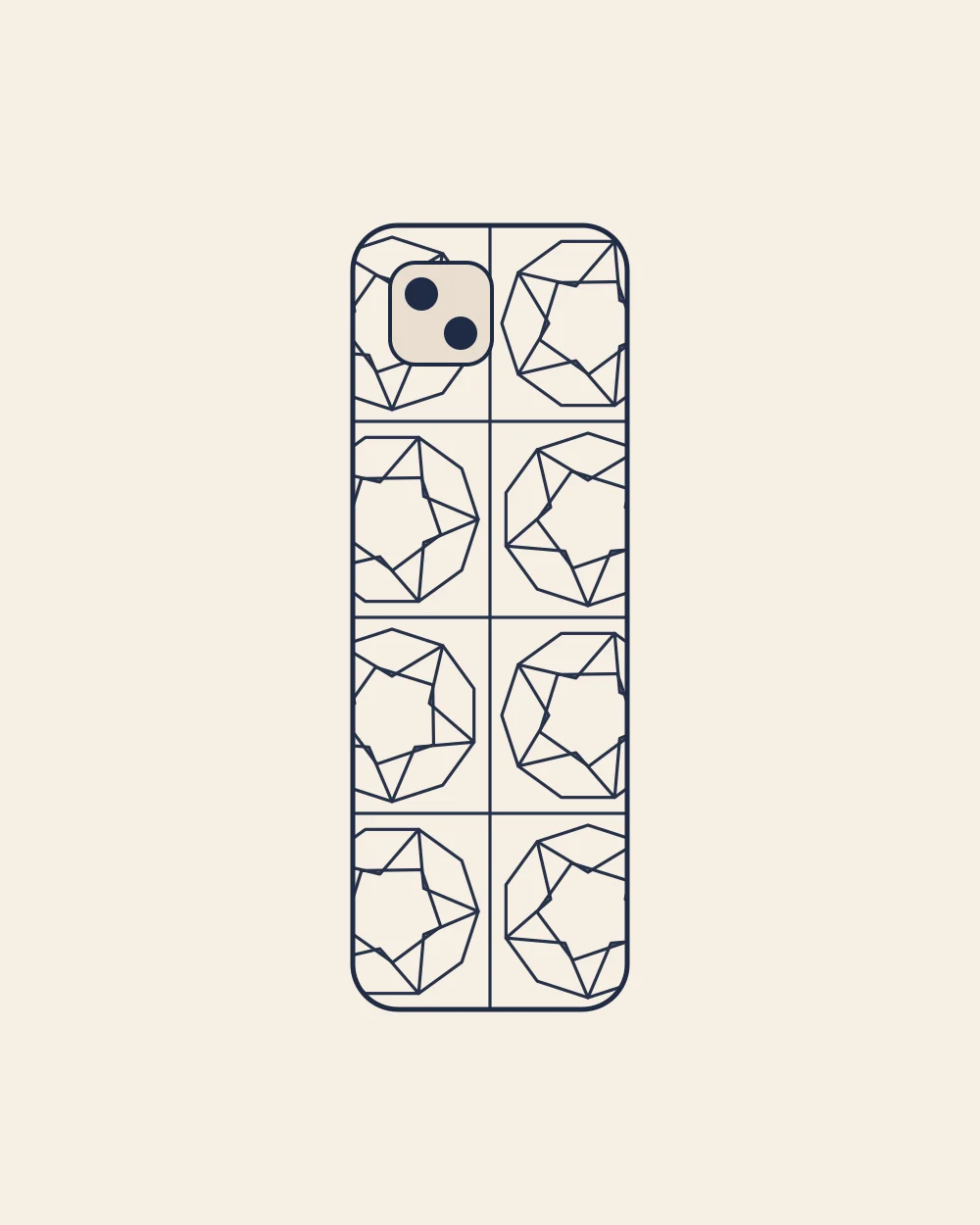
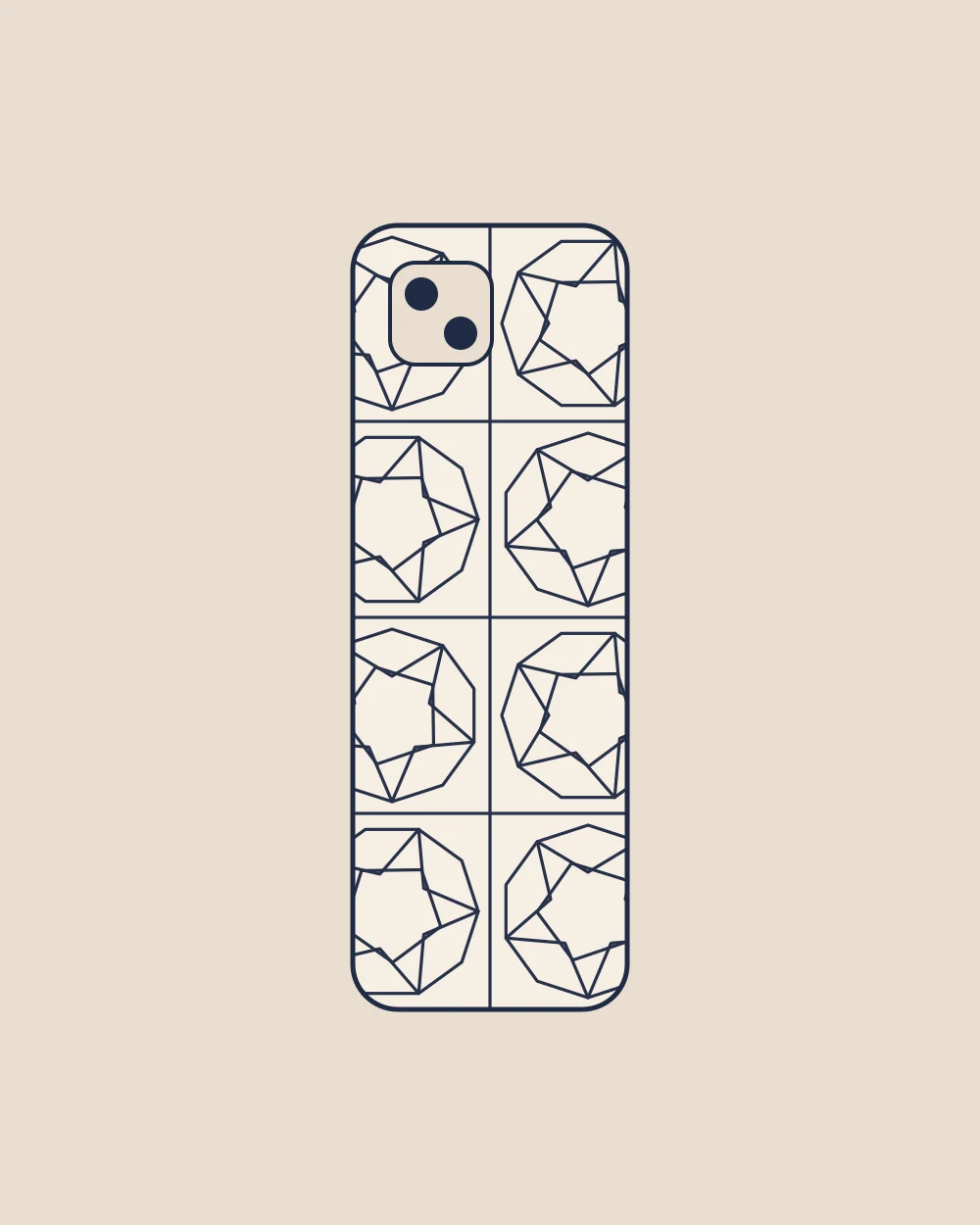
Girih patterns look impossibly complicated and are built from five shapes. Craftsmen in Persia and Central Asia worked with a decagon, a pentagon, a hexagon, a bowtie and a rhombus, each carrying the same strapwork lines across its edges, so that when the tiles meet the straps continue without a seam. The pattern you see on the finished wall is the strapwork — the tiles themselves are invisible scaffolding. We draw both. Most of our girih designs show the strapwork alone, as the tilemakers intended, but the family also includes a few where the underlying tiling is left faintly in place, because seeing the scaffolding is the moment the pattern stops being decoration and becomes a system you could use yourself.
Samples
Four from this family
Everything it is on
3 products
From the same studio
You might also like
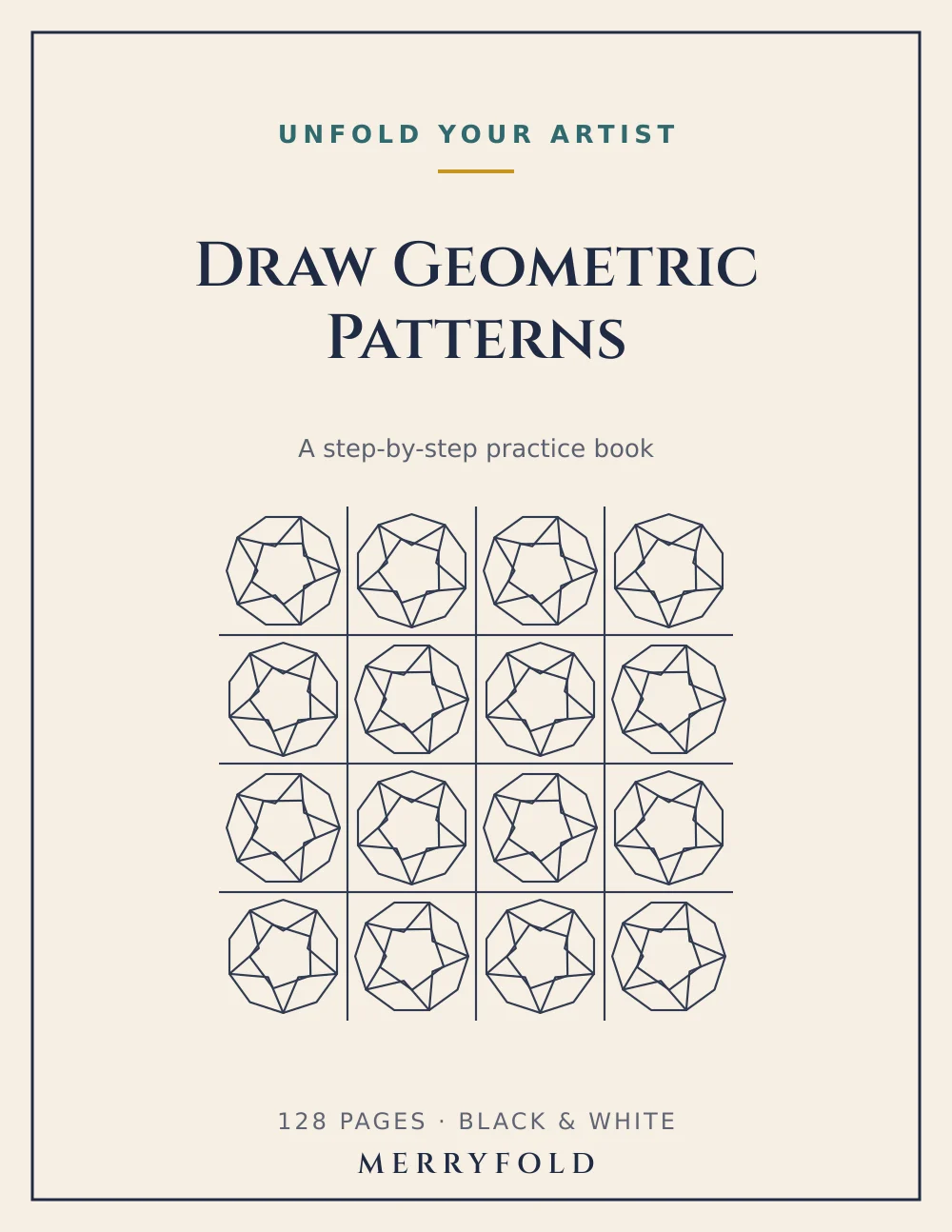
Unfold Your Artist
Draw Geometric Patterns
128 pages
Want this design on something we do not make yet?
Tell us the product and we will say honestly whether our partners can print it and whether the drawing survives at that size. Some of our families do not work on small items, and we would rather say so than sell you a blur.