

What a kolam actually is, and why the dots come first
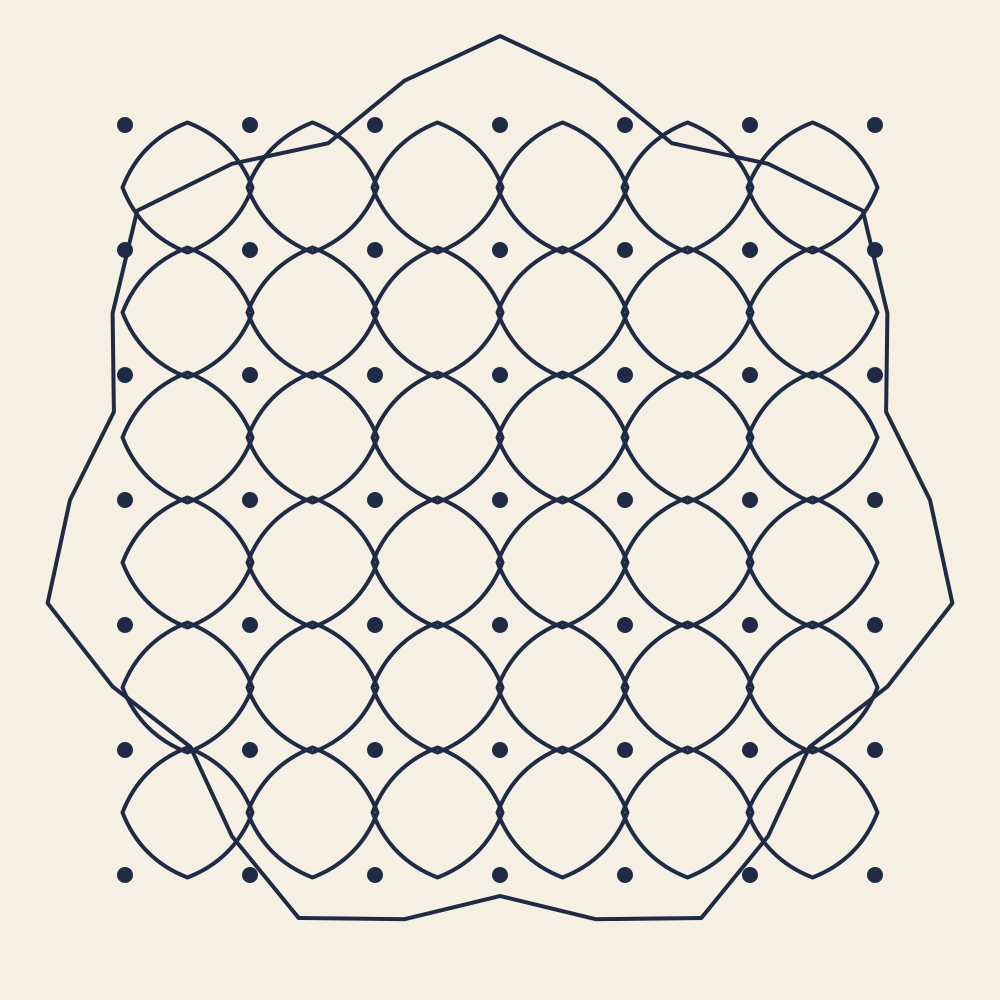
A kolam is one unbroken line looped around a grid of dots. That constraint is the whole art form — here is how it works and how to draw your first one.
Draft copy. This piece was written during the site build and is waiting on an editorial pass — the facts are checked, the prose is not final.
Most people meet the kolam as a photograph: a white pattern on a swept doorstep in Tamil Nadu, taken at dawn, usually without any explanation of what you are looking at.
Here is what you are looking at. The person drawing it has set out a grid of dots — pulli — in rows, usually an odd number across. Then they draw one continuous line that loops around every dot without crossing a dot and without lifting from the ground. That is the rule, and it is the entire art form.
Why that constraint produces what it produces
A single looping line that has to avoid a fixed set of obstacles will naturally produce the woven, over-and-under look that makes kolams read like textiles. Nothing is actually woven. The appearance of weaving is a side effect of a path-finding problem.
It also means two people working on the same dot grid can produce completely different drawings, and both are correct. The grid is the brief, not the answer.
Drawing your first one
Start with a 3×3 grid of dots, spaced about two centimetres apart.
- Put your pen down between two dots, not on one.
- Loop around the nearest dot and come back out on the other side.
- Carry on to the next dot. Do not lift the pen.
- Close the loop when you get back to where you started.
It will be wonky. That is fine — the traditional ones are drawn freehand with rice flour pinched between finger and thumb, at six in the morning, and they are gone by evening.
Why we keep the dots visible
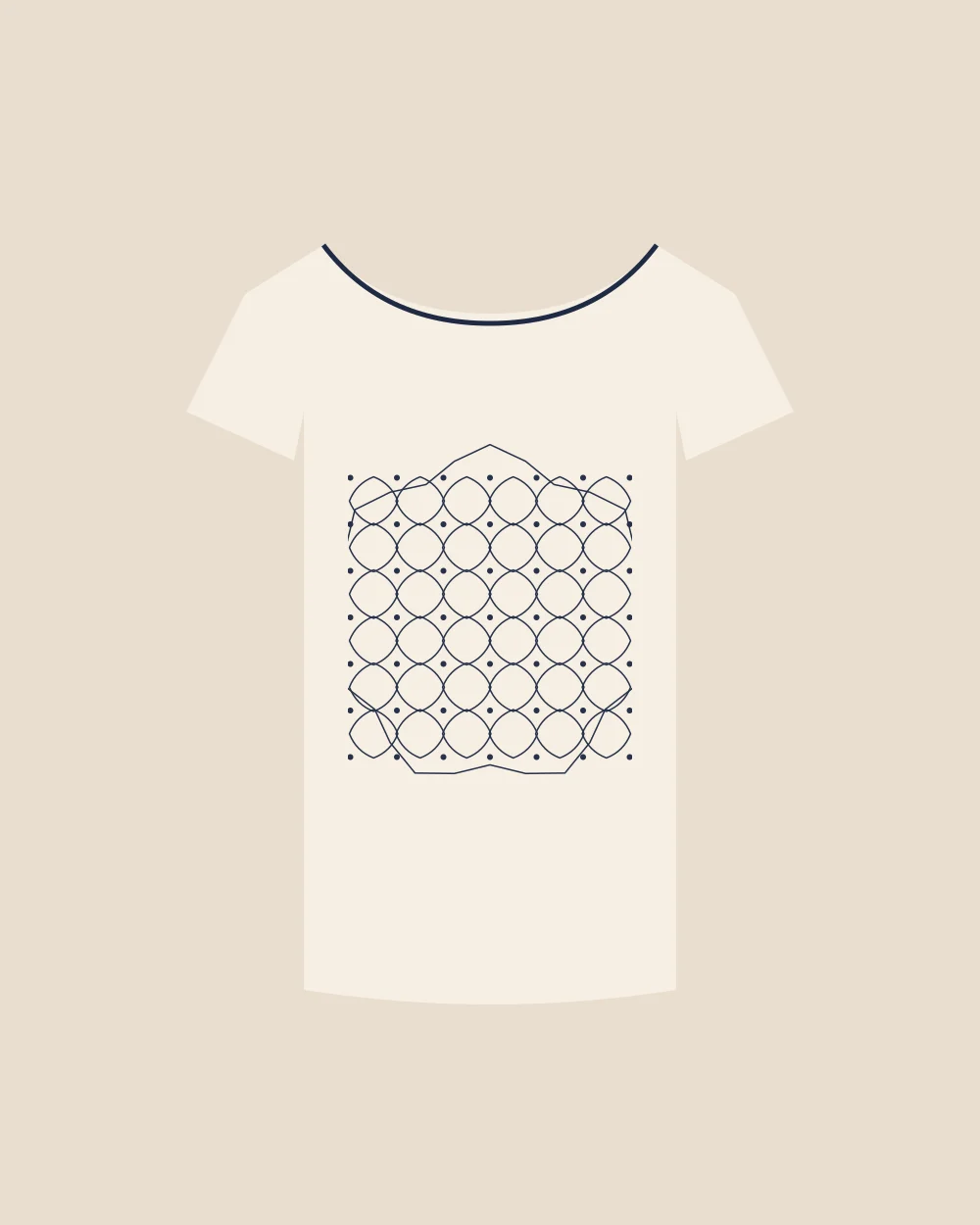
Most of our Kolam & Rangoli designs leave the dot grid in the finished artwork. That is a deliberate choice and not everyone agrees with it. The argument for it: the dots are the instruction. Seeing them is what turns the pattern from decoration into something you could make yourself.
Mentioned above
Everything this post points at
Keep reading
Related posts
A labyrinth is not a maze
One has a single path and no choices. The other has junctions and dead ends. Calling them the same thing mis-sells the page.
"Bold and easy" is a design brief, not a lower standard
Thick lines and open fields are harder to draw well than intricate ones. Here is the test we use.
Five tiles and a thousand years of Persian walls
Girih patterns look impossibly complicated and are built from five shapes. Here is the set, and what the tilemakers were actually drawing.